
Cricket offers plenty of betting markets, but not all of them ask you to predict the same thing. Two markets that often confuse newer bettors are top run scorer and team total. Both are connected to runs, yet the factors that influence them can be very different.
A top run scorer market focuses on an individual batter, while a team total market focuses on the combined score of an entire innings. Understanding that difference is important before comparing odds or deciding which type of market fits your analysis.
For anyone looking to understand different cricket betting markets, it helps to start with the exact question each market is asking.
What Is a Top Run Scorer Market?
A top run scorer market asks you to predict which batter will score the most runs within the defined market.
Depending on the bookmaker and competition, this can mean the highest scorer for one team or the highest scorer across the match. The settlement rules should always be checked before placing a bet because markets can differ between operators.
For example, imagine a T20 match where an opening batter, a No. 3 batter and a middle-order finisher are among the available selections. The opener may have an advantage simply because they are likely to face more deliveries.
However, batting position is only one part of the picture.
Recent form, expected playing XI, opposition bowling attack, venue conditions and the player’s role can all affect the likelihood of a big score. A batter who regularly comes in at No. 5 may have excellent strike-rate numbers but still receive fewer opportunities than an opener.
That makes top run scorer markets more player-specific than team-focused.
What Is a Team Total Market?
A team total market looks at the combined number of runs scored by one team during its innings.
Instead of predicting who will make the runs, the bettor is predicting whether the team’s final score will be above or below a particular line.
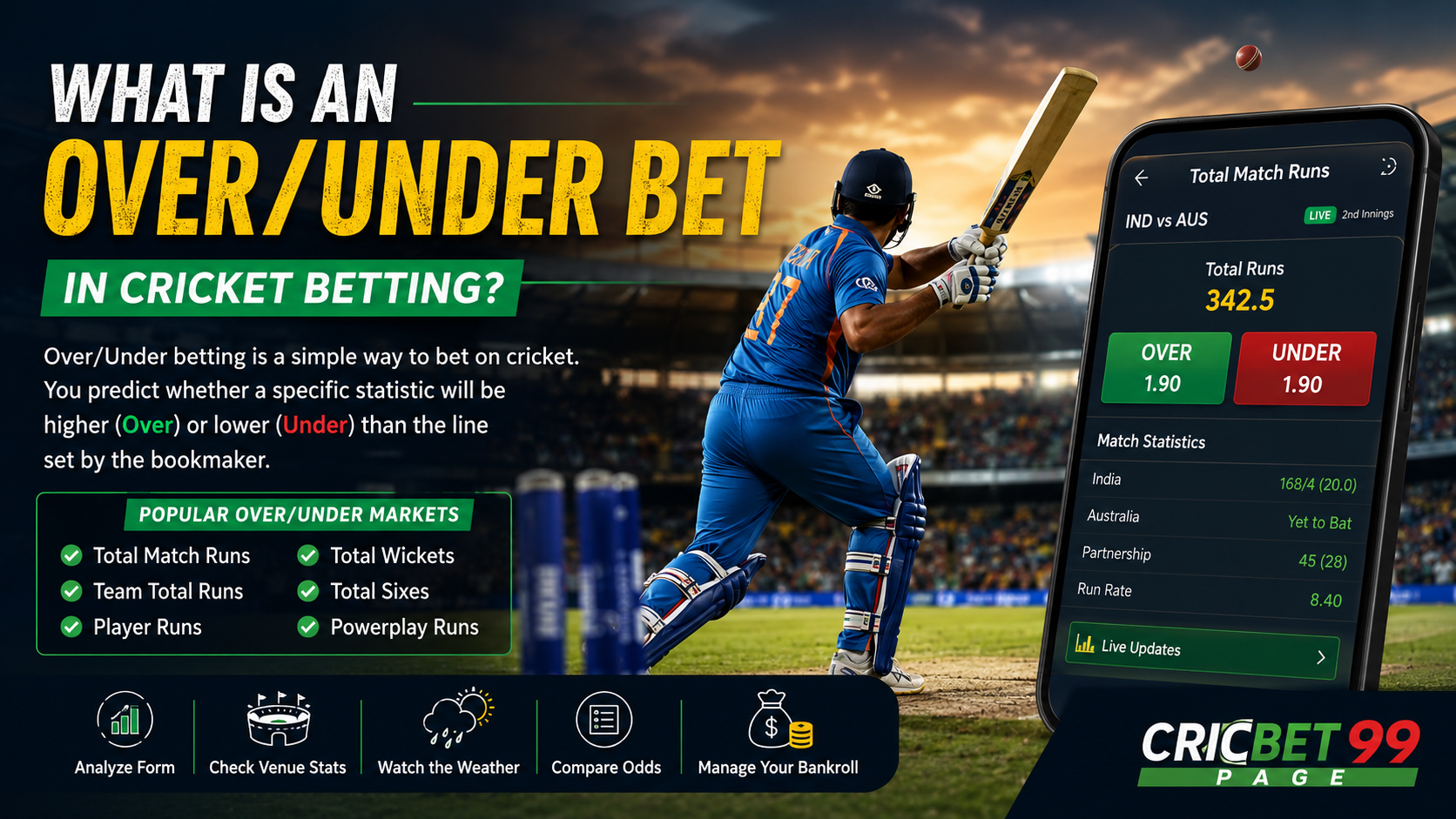
For instance, suppose a sportsbook sets Team A’s total at 171.5 runs.
- Over 171.5 means Team A needs to score at least 172 runs.
- Under 171.5 means Team A needs to finish on 171 runs or fewer.
The individual contribution of each batter is not the main concern. A team could reach the total through one outstanding innings, a strong partnership, several useful contributions, or a combination of boundaries and running between the wickets.
The basic scoring framework is governed by cricket’s playing conditions, including runs from running, boundaries and certain extras. The ICC publishes the official playing conditions for international formats.
The Biggest Difference: Individual Performance vs Collective Output
The easiest way to separate the two markets is to ask a simple question.
Top run scorer: Who will score the most?
Team total: How many runs will the team score?
That difference changes the way you should analyse the match.
For a top run scorer market, you might study a batter’s recent scores, batting position, expected number of deliveries faced, record against certain bowling styles and performance at the venue.
For a team total, you need a much broader picture. You may consider the team’s powerplay scoring, middle-over performance, death-over hitting, batting depth, pitch behaviour and the strength of the opposition attack.
A team can therefore have a strong total without having an obvious individual top scorer.
Why Batting Position Matters More for Top Scorer Markets
Opportunity is one of the most important factors in player-based markets.
Openers usually have the chance to face the greatest number of deliveries because they begin the innings. No. 3 batters can also receive substantial opportunities, particularly if an early wicket falls.
Middle-order players face a different situation. They may score quickly when they come to the crease, but their opportunity can depend heavily on how the innings develops.
A finisher might have an impressive strike rate but face only 10 or 15 balls in a typical match. That can make a top scorer selection much harder, even if the player is an excellent hitter.
This is why simply choosing the batter with the best recent average is not always enough.
What Influences a Team Total?
Team totals require a wider assessment.
Pitch Conditions
A flat batting surface can support a higher-scoring innings, while a slower pitch may make stroke-making more difficult.
Bowling Attack
The quality and style of the opposition attack can significantly affect scoring. A team facing strong new-ball bowlers may have a different powerplay outlook from one facing a weaker attack.
Batting Depth
Teams with reliable batters lower down the order may have a better chance of maintaining their scoring rate after losing early wickets.
Match Format
A T20 innings has a very different scoring pattern from an ODI or Test innings. The number of overs, tempo and tactical approach all change.
Weather and Match Conditions
Rain, interruptions and changes to playing conditions can affect the expected number of overs and therefore the potential team total. The exact settlement rules become especially important when a match is shortened.
Which Market Requires More Player Research?
Top run scorer markets are generally more dependent on individual research.
You need to know who is likely to open, who bats at No. 3, whether a player is confirmed in the XI and how the batter matches up against the opposition.
Team totals require more match-level research. Instead of concentrating on one player, you are assessing how the entire batting unit may perform.
That does not mean one market is automatically easier than the other. They simply require different approaches.
A Simple Example
Consider a hypothetical T20 match where Team A has a total line of 175.5 runs.
Team A’s opening batter scores 68 from 42 balls. The No. 3 batter makes 41, while two middle-order players contribute 25 and 22.
Team A finishes on 181/6.
In this situation, the Over 175.5 team total would be successful because the team’s combined score is 181.
The top run scorer market, however, is concerned with the individual performance. The opener’s 68 becomes important because the question is who scored the most, rather than whether the whole team crossed a particular line.
This example shows why the two markets should not be treated as interchangeable.
How to Compare the Markets Before Making a Decision
A useful starting point is to identify what information you actually have.
If you closely follow player form, batting orders and individual match-ups, a top run scorer market may give you more analytical points to work with.
If you are more comfortable assessing pitch conditions, expected scoring rates, team combinations and opposition bowling, a team total may be easier to evaluate.
It is also worth remembering that odds alone do not tell the complete story. A shorter price does not guarantee an outcome, and a higher price does not automatically represent better value.
Before using any market, check its specific settlement conditions and make sure you understand exactly what is being predicted.
Responsible Approach to Cricket Betting
Cricket betting should be treated as entertainment rather than a guaranteed way to make money. No market can provide a certain result, and even detailed research cannot remove the uncertainty involved in sport.
Set a budget before betting, avoid chasing losses and never stake money that you cannot afford to lose. Understanding the market should come before deciding whether to participate.
Frequently Asked Questions
Is top run scorer the same as team total?
No. Top run scorer focuses on an individual batter, while a team total focuses on the combined runs scored by one team.
Does batting position affect top run scorer markets?
Yes. Batting position can have a major effect because it influences how many deliveries a batter is likely to face.
What does Over 171.5 team runs mean?
It means the selected team must score at least 172 runs for the Over selection to be successful, subject to the market’s specific settlement rules.
Which market depends more on individual player form?
Top run scorer markets are generally more closely connected to individual form, batting position, role and expected opportunity.
Can one batter’s performance influence a team total?
Absolutely. A big individual innings can make a significant contribution to a team’s final total, although the team total ultimately depends on every scoring contribution and the innings as a whole.
Should I check the playing XI before analysing these markets?
Yes. Confirmed team news can be particularly important for player markets because a change in the playing XI or batting order can alter a batter’s expected opportunity.
Final Thought
Top run scorer and team total markets may both revolve around runs, but they answer completely different questions. One asks you to identify the player most likely to finish with the highest score, while the other asks you to estimate the combined output of an entire batting side.
That distinction should shape your research. Look at batting position, player role and individual match-ups when assessing a top run scorer market. For team totals, broaden the analysis to pitch conditions, scoring patterns, batting depth and the opposition attack.
The better you understand what a market actually measures, the easier it becomes to read its odds and make more informed decisions.