Cricket betting offers a wide range of markets, and runs-based markets are among the easiest to understand once you know what the numbers represent. While match winner markets focus on predicting which team will win, a Match Aggregate Runs market focuses on something different: the total number of runs scored during a cricket match.
For cricket fans who closely follow batting conditions, pitch behaviour, scoring patterns and match formats, aggregate runs markets can add another statistical dimension to following a game. However, before considering any market, it is important to understand exactly what is included in the final total and how the market rules apply.
This guide explains Match Aggregate Runs Markets in simple language, including how they work, what factors can affect total runs and what beginners should check before making a decision.
What Is a Match Aggregate Runs Market?
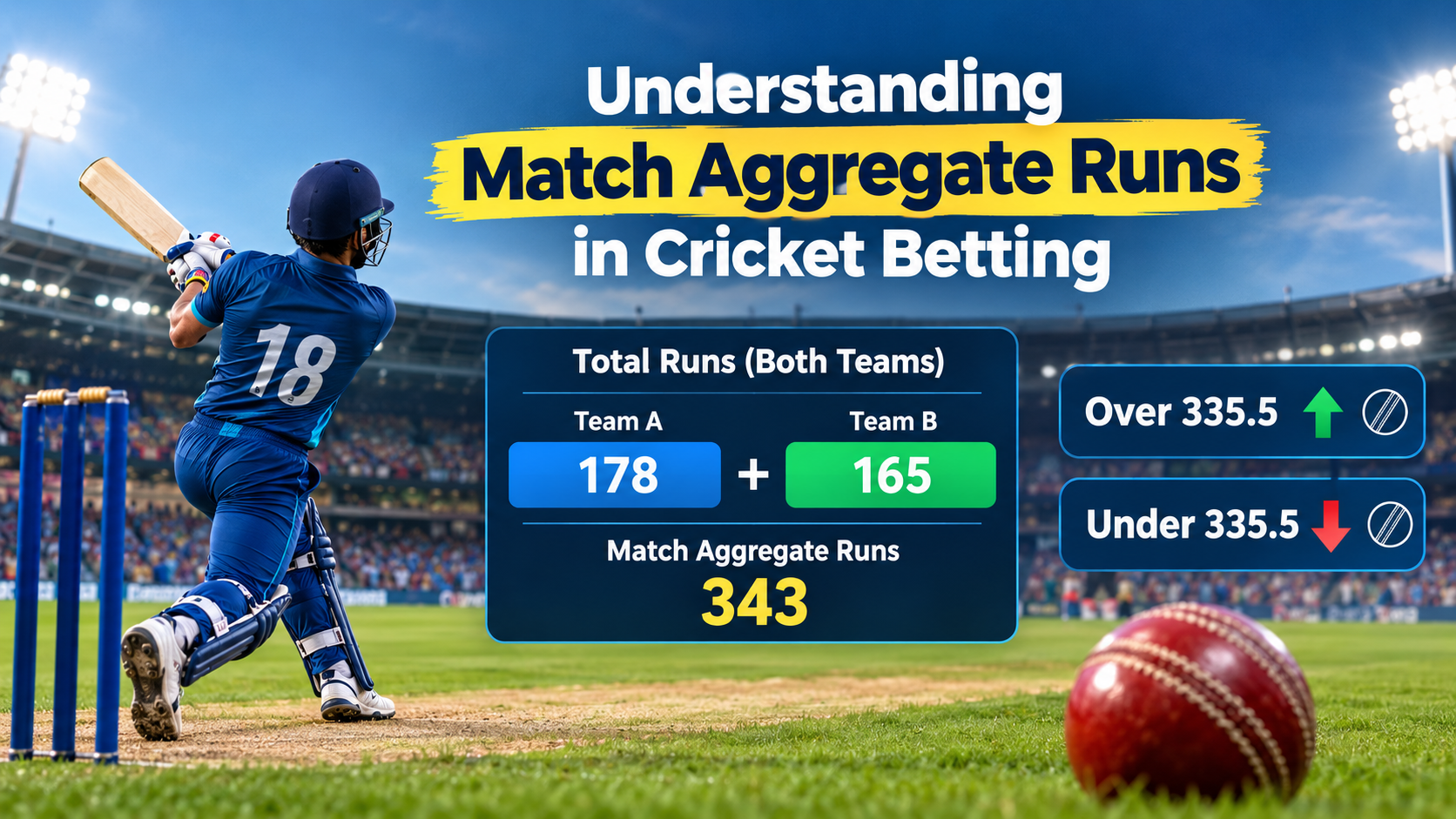
A Match Aggregate Runs Market is based on the combined number of runs scored by both teams during a cricket match.
In simple terms, the market asks whether the total number of runs scored in the match will finish above or below a particular line set by the operator.
For example, imagine a T20 match where the aggregate runs line is:
Match Aggregate Runs: 335.5
The two possible outcomes could be:
- Over 335.5 runs
- Under 335.5 runs
If Team A scores 175 runs and Team B scores 165 runs, the combined total is:
175 + 165 = 340 runs
In this example, the match total finishes above 335.5.
The market does not require you to predict the winning team. The main focus is the total number of runs scored during the match. Cricket betting platforms may offer different total-runs markets depending on the match format, competition and available betting options.
How Match Aggregate Runs Markets Work
The basic idea behind the market is straightforward, but users should always read the individual market rules before participating.
A betting platform sets a predicted total for the match based on different factors. Users then choose whether they believe the final combined score will finish higher or lower than that line.
For example:
Aggregate Runs Line: 300.5
Suppose the final scores are:
- Team A: 155
- Team B: 148
The combined total is:
155 + 148 = 303 runs
Since 303 is higher than 300.5, the total finishes over the line.
The decimal value, such as .5, is commonly used to avoid an exact tie between the final score and the market line.
Although the concept is simple, the final settlement can depend on specific platform conditions, including shortened matches, abandoned games and other match interruptions. This is why reading the market rules before making any decision is important.
Why Match Aggregate Runs Can Be Different From a Team Total Market
A common mistake among beginners is confusing Match Aggregate Runs with Team Total Runs.
A Team Total Runs Market focuses on the score of one specific team.
For example:
Team A Total: Over or Under 170.5
Only Team A’s runs matter in this market.
A Match Aggregate Runs Market, however, combines the scores of both teams.
For example:
- Team A scores 165
- Team B scores 172
The aggregate match total is:
337 runs
This difference is important because the factors affecting the two markets can also be different. A team may score fewer runs than expected, while the opposing team may compensate with a higher score.
Factors That Can Affect Match Aggregate Runs
Several match conditions can influence how many runs are eventually scored.
1. Match Format
The format plays an important role in expected scoring.
T20 cricket generally has a faster scoring rate because teams have limited overs and often play more aggressively. ODI matches have more overs, which creates greater scoring potential, while Test matches operate differently because innings can last much longer.
For this reason, aggregate runs lines can vary significantly between formats.
2. Pitch Conditions
The playing surface can influence the number of runs scored.
A flat batting-friendly pitch may provide better conditions for stroke play, while a pitch offering movement, spin or uneven bounce can make scoring more difficult.
Historical scoring patterns at a venue can provide useful context, but previous results do not guarantee that a future match will follow the same pattern.
3. Weather Conditions
Weather can affect cricket in several ways.
Rain interruptions can reduce the number of overs available, while humidity, cloud cover and other conditions may affect bowlers and batters differently.
Shortened matches can also have specific settlement rules depending on the operator. Always check the conditions attached to the market before relying on a standard scoring assumption.
4. Team Batting Style
Some teams are known for aggressive starts, while others prefer to build their innings more gradually.
Batting depth can also influence aggregate runs. A side with strong lower-order batters may continue scoring quickly even after losing early wickets.
However, cricket remains unpredictable, and one strong batting performance does not guarantee similar results in the next match.
5. Bowling Strength
Strong bowling attacks can influence match totals by controlling the scoring rate and taking wickets at important stages.
For example, a team may have an aggressive batting lineup but struggle against quality spin or pace bowling. Death-over specialists can also influence the final score by limiting boundaries during the closing overs.
Looking at both batting and bowling conditions provides a more complete picture than focusing on only one team.
Live Match Aggregate Runs Markets
Some cricket platforms also offer aggregate runs markets during live matches.
Live markets can change as the match progresses because the available information becomes clearer with every over.
Factors that may influence live odds include:
- Current score
- Wickets lost
- Overs remaining
- Current run rate
- Required run rate
- Partnerships
- Match momentum
For example, if the first innings produces a much higher score than expected, the aggregate runs market may change significantly for the remainder of the match.
Live cricket markets move quickly, and users should avoid making rushed decisions simply because odds change. Understanding the score and match situation is generally more useful than reacting emotionally to a single boundary or wicket. Cricbet99’s own cricket content also highlights how scores, wickets, run rates and remaining overs can influence live market movement.
Why Understanding Market Rules Matters
Market names can sometimes sound similar while having different settlement conditions.
Before participating in a Match Aggregate Runs Market, check:
- Whether both innings are included
- Whether super overs are included
- What happens if the match is abandoned
- How rain-shortened matches are settled
- Whether extra innings or special conditions apply
Rules can vary between operators and competitions.
This is one reason why beginners should focus on understanding the market first instead of simply looking at the odds.
Using Cricket Statistics for Better Match Understanding
Statistics can help cricket fans understand how a match may develop, although they cannot guarantee any result.
Useful areas to review may include:
- Average venue scores
- Recent team scoring patterns
- Head-to-head match conditions
- Pitch reports
- Weather forecasts
- Batting depth
- Bowling strength
The goal should not be to search for a guaranteed outcome. Cricket can change quickly due to a collapse, an unexpected partnership, changing weather or exceptional individual performances.
For readers looking for a broader overview of available cricket markets and betting access, a Cricbet99 ID Provider can be referenced naturally as part of understanding different cricket market categories and live match options.
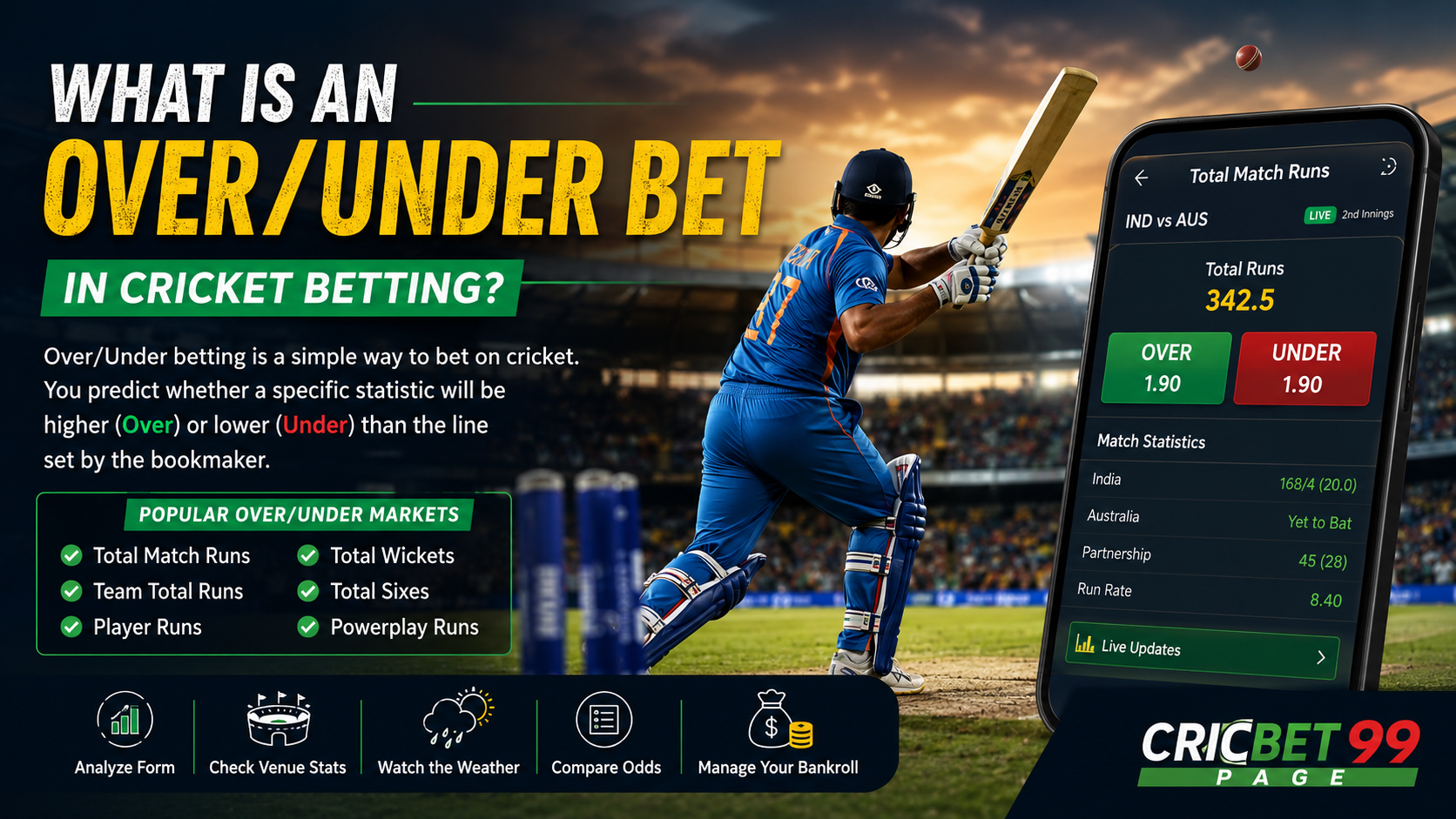
The platform’s cricket betting section includes categories such as match winner, session, over/under, player performance and live cricket markets.
Responsible Approach to Cricket Betting
Cricket betting should always be treated as entertainment, not as a guaranteed way to make money.
Setting a clear budget before participating can help prevent impulsive decisions. It is also important not to chase losses or increase stakes simply because a previous prediction did not work out.
Responsible gambling practices are designed to reduce potential harm and encourage informed decisions and sensible limits.
Always check the laws, age requirements and regulations that apply in your location before participating in any gambling activity.
FAQs About Match Aggregate Runs Markets
What does Match Aggregate Runs mean in cricket betting?
Match Aggregate Runs refers to the combined total number of runs scored by both teams during a cricket match.
Is Match Aggregate Runs the same as a Team Total?
No. A Team Total focuses on one team’s score, while Match Aggregate Runs combines the runs scored by both teams.
What factors affect aggregate runs in a cricket match?
Pitch conditions, match format, weather, batting strength, bowling quality and match situations can all affect the final total.
Do rain interruptions affect Match Aggregate Runs Markets?
They can. The result and settlement may depend on the operator’s rules for shortened or abandoned matches.
Are Match Aggregate Runs Markets available during live cricket?
Some platforms may offer live totals markets that update as the match progresses, depending on the available sportsbook options.
Final Thought
Match Aggregate Runs Markets provide a simple way to focus on the overall scoring pattern of a cricket match rather than predicting the winning team. The market is based on one central question: how many combined runs will both teams score?
Understanding the match format, pitch, weather, team strengths and market rules can make these markets easier to follow. However, no statistic or prediction can guarantee a result because cricket remains unpredictable.
The best approach is to understand the market conditions carefully, use statistics as context rather than certainty and always participate responsibly within a comfortable budget.