Cricket betting has expanded well beyond predicting the winner of a match. Today, bettors can choose from a wide range of player and performance markets, including runs, wickets, strike rates, partnerships and boundary-based outcomes. One market that can be particularly interesting for fans who follow attacking batters is the Highest Individual Boundary Markets.
These markets focus on which player will record the highest number of boundaries in a particular match or competition. Instead of simply predicting who will score the most runs, bettors are looking specifically at a batter’s ability to find the rope through fours and sixes.
Understanding how these markets work, what influences them and how to assess the available options can make them easier to follow.
What Are Highest Individual Boundary Markets?
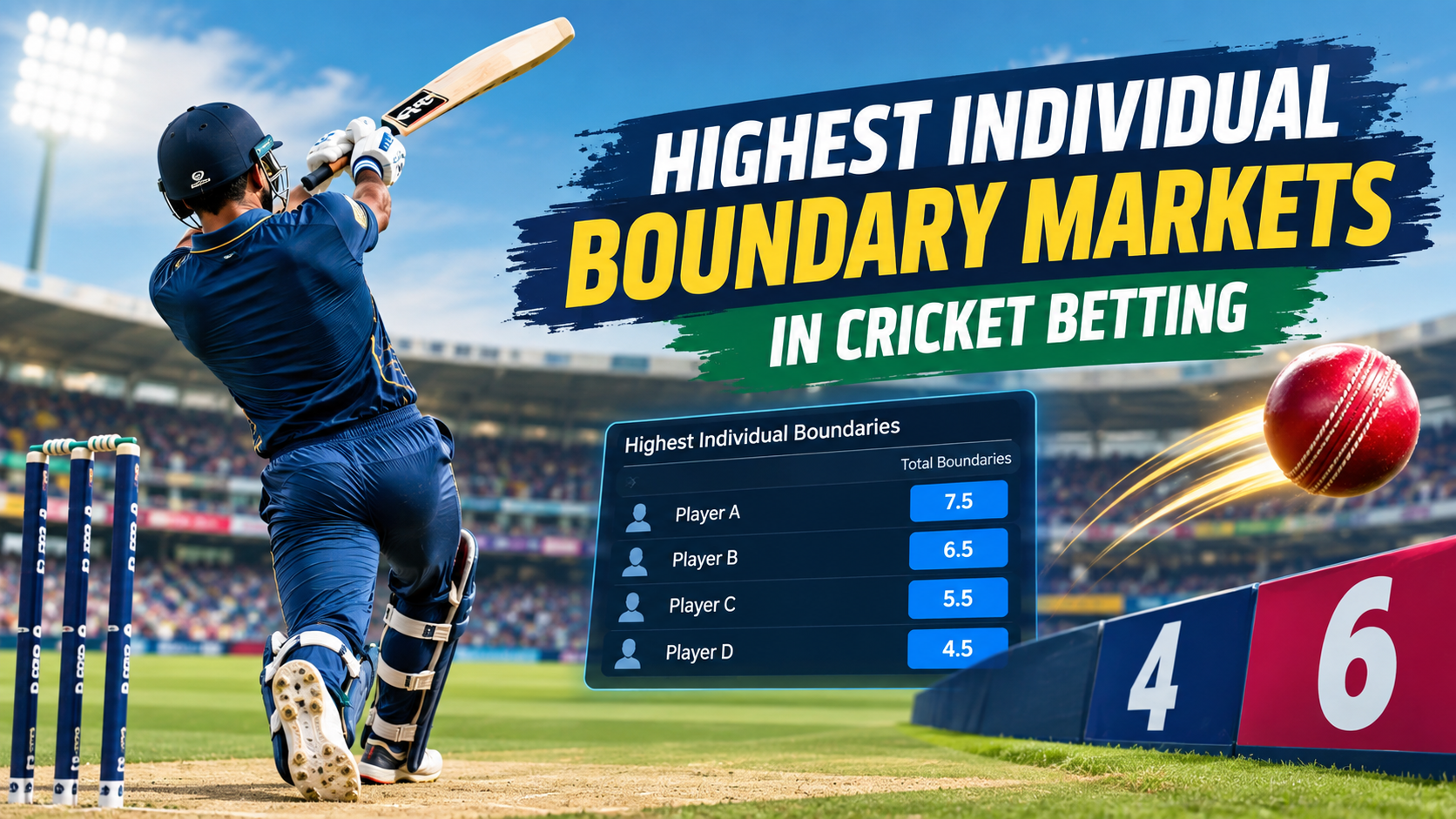
Highest Individual Boundary Markets are betting options based on the number of boundaries hit by individual players during a cricket match.
Depending on the bookmaker and competition, the market may ask you to predict which batter will finish with the most boundaries. Some markets can focus on fours, while others may combine fours and sixes into a total boundary count.
For example, imagine a match featuring four prominent batters. A market might list:
- Player A – 7.5 boundaries
- Player B – 6.5 boundaries
- Player C – 5.5 boundaries
- Player D – 4.5 boundaries
The exact format varies between betting platforms, but the basic idea remains the same: assess which player has the strongest opportunity to produce the highest boundary total.
The distinction between fours and sixes is important. Under the Laws of Cricket, a standard boundary four awards four runs, while a boundary six awards six runs when the ball is struck by the batter and first lands beyond the boundary.
Why Boundary Markets Are Different From Run Markets
A batter can score a substantial number of runs without hitting many boundaries. Equally, an aggressive batter can make a relatively short innings highly productive through frequent fours and sixes.
This makes boundary markets different from standard player-run markets.
Consider a batter who scores 55 runs from 42 balls with five fours and two sixes. Another player might score 48 from only 24 balls with three fours and four sixes. Depending on the specific market, the second batter could have the stronger boundary performance despite scoring fewer overall runs.
This is why bettors should not automatically assume that the player most likely to score the most runs will also lead the boundary count.
What Should You Look At Before Choosing a Player?
Several factors can influence a batter’s boundary potential. Looking at these factors together is more useful than relying on reputation alone.
1. Batting Position
A player’s position in the order can have a major impact.
Top-order batters generally have more opportunity to face deliveries, especially in limited-overs cricket. Openers can also take advantage of fielding restrictions during the early overs, making boundaries easier to find in certain conditions.
Middle-order players may have fewer balls available, although they can become particularly valuable when entering during a high-scoring phase of an innings.
2. Recent Batting Form
Recent performances can provide useful context.
A batter consistently finding the boundary in recent matches may be playing with confidence and timing the ball well. However, recent statistics should not be considered in isolation. The quality of opposition, match format and playing conditions can all change the picture.
3. Ground Dimensions
Venue characteristics are another important consideration.
Some grounds have shorter square boundaries, while others offer larger playing areas. The dimensions can influence how frequently batters attempt aerial shots.
The ICC playing conditions specify boundary-related requirements for international cricket, while the exact characteristics of individual venues can still create meaningful differences in how batting unfolds.
4. Pitch Conditions
A flat batting surface can create more opportunities for attacking strokes, while a slower or uneven pitch may encourage batters to play more conservatively.
Weather can also affect conditions. A pitch that becomes easier to bat on as a match progresses may benefit players batting later in the innings.
5. Bowler Matchups
The bowlers a batter is likely to face can be just as important as the batter’s own ability.
Some players are particularly strong against pace, while others prefer spin. If a batter has historically performed well against the type of bowling expected in the match, that can provide useful context when assessing boundary potential.
Fours and Sixes Should Be Considered Separately
One of the most important points when studying boundary markets is that not all boundaries are produced in the same way.
A batter who relies heavily on timing and placement may accumulate numerous fours. Another batter may have a power-hitting style that produces more sixes.
This difference matters because a market based on total boundaries can reward both styles, while a specific fours or sixes market requires a more targeted assessment.
The official Laws of Cricket explain how boundary fours and sixes are awarded, making the distinction between the two fundamental to understanding these markets.
How Match Format Can Change Boundary Opportunities
The format of cricket can significantly influence boundary production.
In T20 cricket, aggressive batting is usually central to the strategy. Batters have limited deliveries available, which can encourage more attacking shots.
ODI cricket provides a longer innings and allows players to build an innings before accelerating. As a result, boundary patterns can change considerably between the early, middle and final stages.
Test cricket is different again. While attacking innings certainly occur, the pace of scoring can be slower and boundary markets may require a different approach.
For anyone researching Cricket Betting, understanding the format should therefore be part of the overall assessment rather than treating every match in the same way.
Common Mistakes to Avoid
One of the biggest mistakes is choosing a player simply because they are a famous six-hitter.
Reputation does not guarantee boundary production in every match.
Another common mistake is ignoring playing opportunities. A batter expected to face only a limited number of deliveries may have less opportunity to finish with the highest boundary count.
It is also worth avoiding decisions based entirely on one recent innings. A single performance can be influenced by match conditions, opposition tactics and the player’s role.
Instead, consider batting position, expected balls faced, venue, pitch, opposition bowling and recent performance together.
Using Statistics More Effectively
Statistics can make boundary markets easier to understand when they are used with context.
Useful numbers can include:
- Average boundaries per innings
- Fours per 100 balls
- Sixes per 100 balls
- Recent boundary frequency
- Performance at the specific venue
- Results against similar bowling attacks
- Expected batting position
- Average balls faced
The goal is not to find one statistic that guarantees an outcome. Cricket remains unpredictable, and even an excellent matchup can produce a low boundary count.
Statistics are most useful when they help identify players whose opportunities and playing style match the conditions of the game.
Why Highest Individual Boundary Markets Can Be Interesting
The appeal of these markets comes from their focus on a specific aspect of batting.
Instead of asking whether a player will score a particular number of runs, they concentrate on attacking output. That can make them especially interesting for viewers who follow individual batting styles and matchups.
They can also encourage closer attention to factors such as venue size, bowling combinations, batting order and game situation.
However, responsible participation is important. Betting outcomes are never guaranteed, and predictions should always be treated as entertainment rather than a source of certain income.
FAQs About Highest Individual Boundary Markets
What are Highest Individual Boundary Markets?
They are cricket betting markets that focus on which player will record the highest number of boundaries in a match or competition. The exact rules and settlement conditions depend on the market provider.
Do fours and sixes count as boundaries?
Yes. In standard cricket scoring, both fours and sixes are boundaries. A boundary four normally awards four runs, while a boundary six awards six runs.
Does batting position affect boundary potential?
Yes. Batting position can influence how many deliveries a player is likely to face and when they enter the innings. Top-order batters often have more opportunity to build a high boundary count.
Is a six-hitter always the best choice?
No. A batter who scores frequent fours can potentially finish with more total boundaries than a player known primarily for hitting sixes. The specific market should always be checked before making an assessment.
Does the venue matter?
Yes. Ground dimensions, pitch behaviour and other venue characteristics can influence scoring patterns and boundary opportunities.
Are boundary markets available for every cricket match?
Availability depends on the competition, bookmaker and specific market. Major international matches and popular leagues generally offer a wider selection of player-based markets.
Final Thought
Highest Individual Boundary Markets provide a more focused way of looking at attacking batting in cricket. Rather than concentrating only on total runs, they consider how frequently individual players can find the boundary.
The strongest analysis combines several factors, including batting position, recent form, venue dimensions, pitch conditions, bowling matchups and expected opportunities. Understanding the difference between fours and sixes is equally important when comparing players.
For cricket fans interested in player-performance markets, these factors can provide a more structured way to assess boundary-related options while keeping expectations realistic and maintaining responsible betting habits.