
Cricket betting has changed considerably as online platforms now offer markets covering almost every part of a match. Instead of simply predicting which team will win, users can find options based on team totals, individual runs, wickets, partnerships, player milestones and other match events.
Among these choices, team performance markets and player markets are two important categories. Although both depend on what happens on the field, they require different ways of looking at a match.
Understanding that difference can make cricket betting markets easier to read and helps users decide which type of market matches their knowledge and interests.
What Are Team Performance Markets?
Team performance markets focus on the collective performance of one side rather than a particular player.
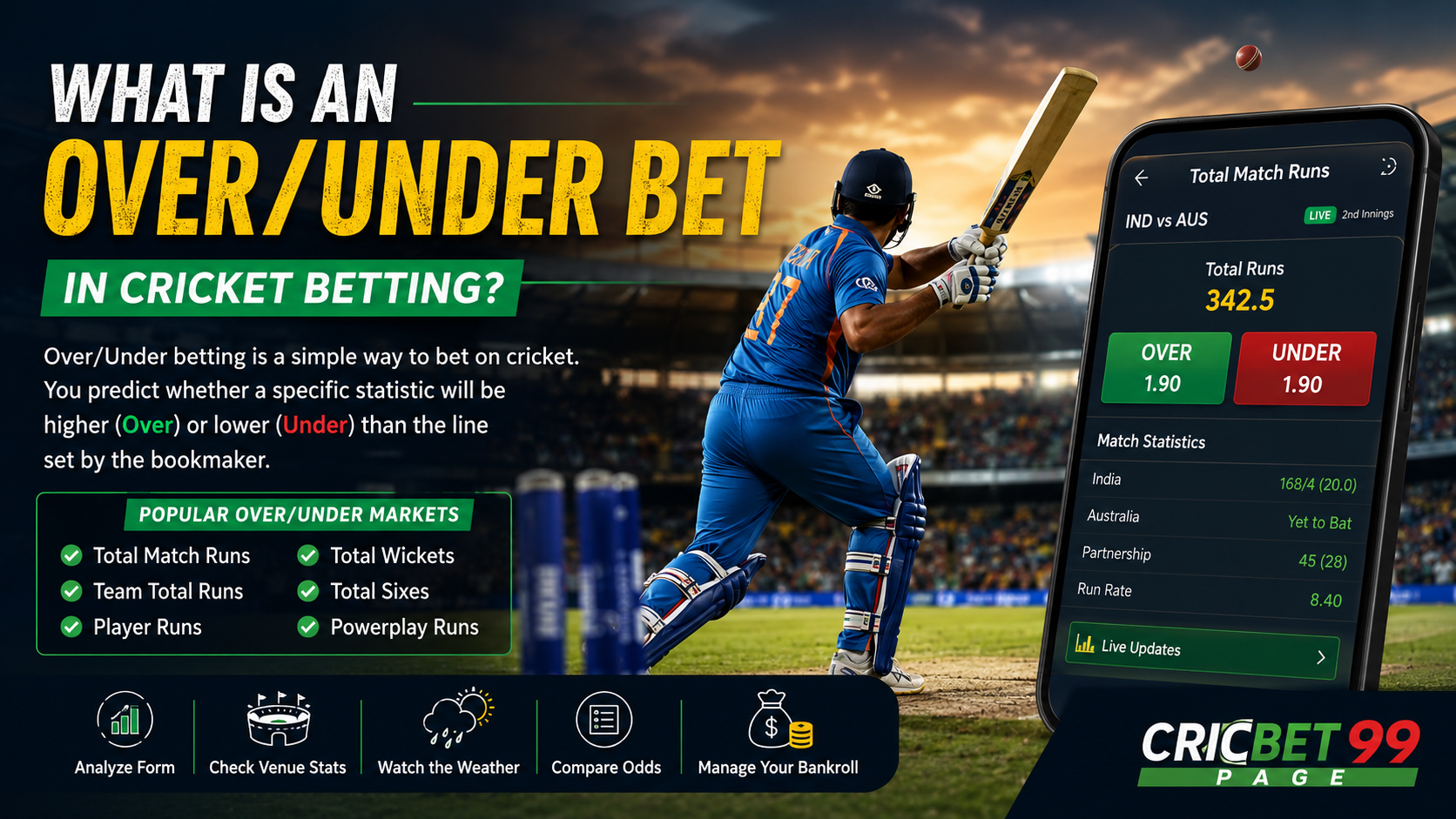
For example, a market may ask whether a team will score over or under a specified number of runs. Other markets can focus on the team’s total wickets, innings score, powerplay performance or other measurable team outcomes.
The key point is that the result depends on several players working together.
A team’s total score, for instance, can be influenced by openers, middle-order batters, the lower order, running between the wickets, extras and the opposition bowling attack. One player having a poor game does not necessarily decide the result of a team performance market.
This makes team markets useful for people who prefer analysing the bigger picture.
What Are Player Markets?
Player markets are based on the performance of an individual cricketer.
Common examples include:
- Player runs
- Top batsman
- Top bowler
- Player wickets
- Player to score a particular milestone
- Player to hit a specified number of sixes
- Player performance-related markets
These markets require closer attention to individual roles and circumstances.
A batter’s position in the order can be extremely important. An opener generally has more opportunity to face deliveries than a lower-order batter. Similarly, a bowler expected to bowl during the powerplay or death overs may have different wicket opportunities from a bowler used mainly in the middle overs.
Player markets therefore involve a narrower area of analysis than team markets.
The Biggest Difference: Team Strength vs Individual Opportunity
The most obvious difference between these markets is the type of information that matters.
Team performance markets usually require analysis of the entire side. Recent team results, batting depth, bowling resources, venue conditions and opposition strength can all matter.
Player markets are more focused.
For a batter, you might consider recent scores, batting position, expected balls faced, opposition bowling and conditions. For a bowler, factors such as expected overs, bowling role, recent form and the opposition’s batting style can be more relevant.
The International Cricket Council’s ranking system is also useful when researching form and performance because it provides separate rankings for teams and individual players across major international formats.
Team Markets Can Be Less Dependent on One Player
One advantage of looking at team performance is that the outcome is not normally tied to a single cricketer.
Imagine a team has a strong top order but one of its main batters gets out cheaply. Another batter could still make a significant contribution, while the lower order might add valuable runs.
The same principle applies to bowling.
If one bowler fails to take wickets, another bowler can make up for it. A strong bowling unit can therefore influence a team-based market even when an individual player does not have a standout performance.
This makes team markets more closely connected to the overall balance of the playing XI.
Player Markets Depend Heavily on Role
Player markets can change considerably depending on how a player is used.
A batter who normally opens but is moved down the order may have fewer opportunities. A bowler who usually bowls four overs but is recovering from an injury could have restrictions.
The confirmed playing XI is therefore important.
For player markets, it is also useful to understand the difference between a player’s reputation and their current role. A famous batter is not automatically the best candidate for every individual performance market. Opportunity, role and match conditions can matter just as much as reputation.
Format Makes a Difference
Team and player markets can behave differently across Test cricket, ODIs and T20s.
In T20 cricket, fewer overs mean that individual events can have a larger effect. A quick 30-run innings or a two-wicket spell can change the direction of a match within minutes.
ODIs provide more time for teams and players to recover from setbacks. Batting depth, partnerships and bowling rotations can become particularly important.
Test cricket creates an entirely different environment. Players have more time to influence a match, while pitch deterioration, workload and long spells can become major factors.
This is why the same player or team should not always be assessed in exactly the same way across formats.
How to Compare Team and Player Markets
Before considering either market, it helps to ask a few simple questions.
1. What is the team’s recent form?
Look beyond just wins and losses. Consider how consistently the team has been scoring runs, taking wickets and handling different match situations.
2. What is the player’s current role?
Check batting position, expected bowling overs and whether the player is regularly performing the same role.
3. How do the conditions suit the team?
Pitch type, weather and venue characteristics can affect the balance between batting and bowling.
4. Who is available?
Injuries, rest, selection changes and the confirmed playing XI can have a major impact.
5. What does the market actually measure?
Always understand the exact settlement condition. A team total market and a match-winner market are not the same thing, even though both involve team performance.
Which Market Requires More Detailed Analysis?
Neither market is automatically easier.
Team markets involve more variables because several players contribute to the final outcome. However, player markets can also be highly unpredictable because one dismissal, injury or change in role can quickly affect an individual result.
Player markets may suit cricket followers who closely track individual statistics. Team markets may be more comfortable for those who prefer analysing overall strength, tactics and match conditions.
The important point is to understand the market before making any decision.
Why Market Rules Matter
Different cricket markets can have different settlement rules. This is particularly important for player-based markets.
For example, users should check what happens if a selected player does not appear in the match, whether a shortened game affects the market and how abandoned matches are handled.
Rules can also differ between operators and markets, so reading the specific terms is an important step rather than assuming every market works in the same way.
Using Cricket Data More Effectively
Good cricket analysis does not need to rely on one statistic.
For team markets, useful information can include recent results, average scores, bowling strength, batting depth and venue performance.
For player markets, look at recent form, batting position, bowling workload, strike rate, economy rate and opposition match-ups where reliable data is available.
The [ICC rankings] can also provide a useful starting point for checking recognised team and player performance data across international cricket.
For readers comparing different cricket markets and betting options, Cricket Betting resources can also make it easier to understand how match, team and player markets are structured.
Responsible Approach to Cricket Betting
Understanding markets does not guarantee a winning result. Cricket contains a large amount of uncertainty, and even detailed analysis cannot predict every event.
Anyone choosing to participate should understand the risks, follow the laws and regulations that apply to their location, and avoid treating betting as a guaranteed source of income.
Setting a personal spending limit and avoiding chasing losses are also important parts of a responsible approach.
FAQs
What is a team performance market in cricket?
A team performance market focuses on an outcome produced by the entire team, such as innings runs or another specified team statistic.
What is a player market?
A player market focuses on an individual cricketer’s performance, such as runs, wickets or another defined statistical outcome.
Are team markets and player markets the same?
No. Team markets measure collective performance, while player markets focus on one individual.
What matters most in player markets?
Role, recent form, batting position, expected workload, opposition and match conditions can all be important.
Why is the playing XI important?
A player who does not participate cannot produce the expected performance, and different markets have different rules for non-participation. Always check the market terms.
Are player markets more difficult than team markets?
Not necessarily. Both involve uncertainty, but they require different types of analysis. Player markets focus more heavily on individual opportunity and role.
Final Thought
Team performance markets and player markets may appear similar at first, but they ask very different questions. Team markets are about the combined output of a side, while player markets concentrate on the contribution of one cricketer.
The better approach is not to assume that one market is always easier. Instead, understand exactly what the market measures, study the relevant statistics, check the playing conditions and read the settlement rules before making a decision.
For cricket followers, knowing the difference between these markets can make the wider world of cricket betting much easier to understand and compare.