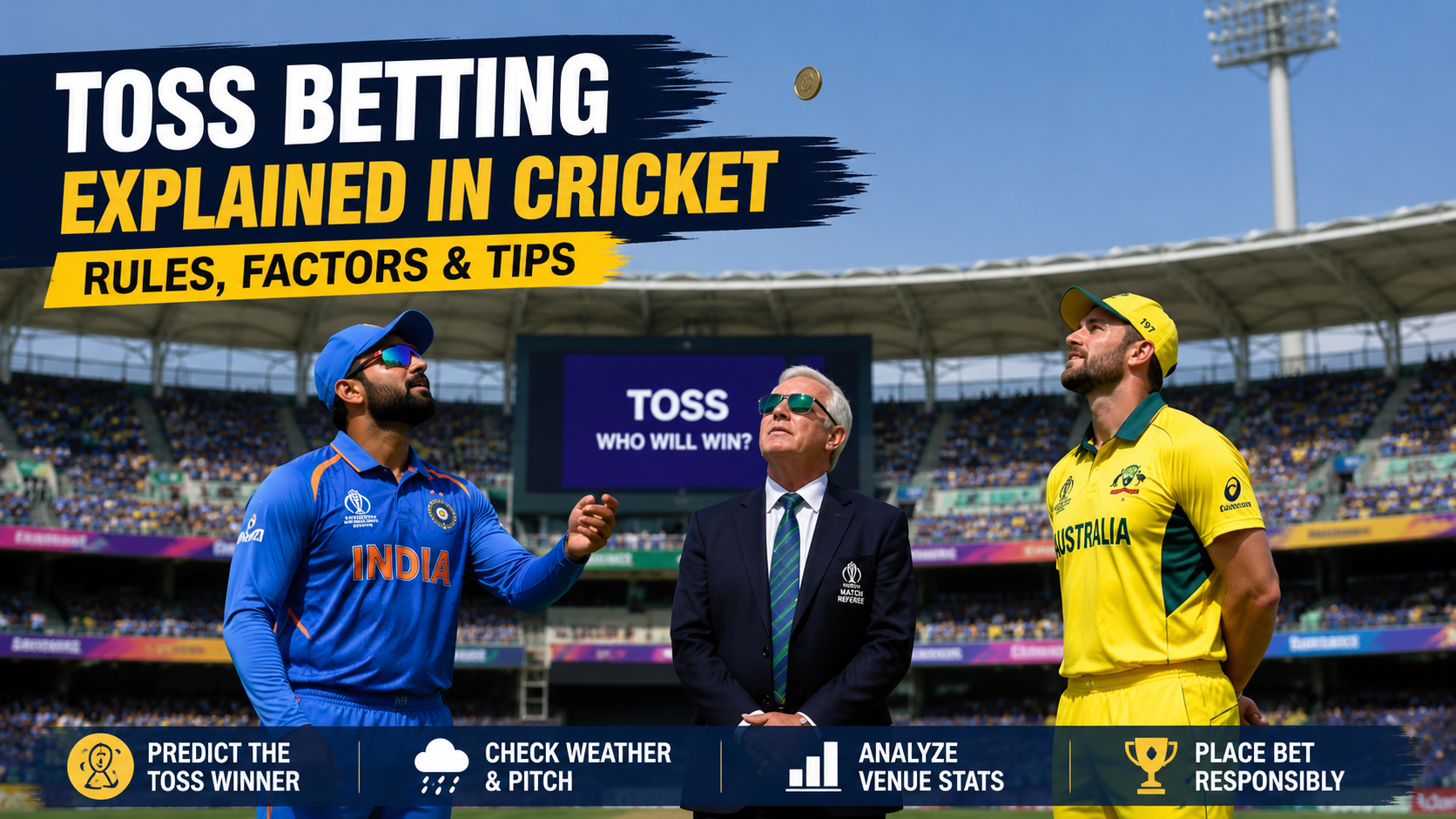

Cricket betting has moved well beyond simply predicting which team will win a match. Modern cricket markets allow fans to focus on specific aspects of a game, including runs, wickets, partnerships, player performances and boundaries. One market that often attracts attention is the team total fours market.
Instead of predicting the final score or match winner, this market focuses specifically on how many fours a team will hit during its innings. For anyone exploring Cricket Betting, understanding how this market works can make match analysis more structured and easier to follow.
What Is the Team Total Fours Market?
The team total fours market is based on the number of boundaries worth four runs that a particular team scores during its innings.
For example, a betting market might offer a line such as:
- Team A – Over 14.5 fours
- Team A – Under 14.5 fours
If Team A finishes its innings with 15 or more fours, the “Over” selection would meet the statistical target. If the team records 14 or fewer fours, the “Under” selection would meet it, subject to the specific rules of the market.
The important point is that this market concerns fours rather than total runs. A team can score a large number of runs without hitting an unusually high number of fours, particularly when its batters rely heavily on running between the wickets or sixes.
Why Fours Matter in Cricket Analysis
Fours can provide useful information about a team’s batting approach. A side that consistently finds the boundary may be playing aggressively and putting pressure on the bowling attack.
However, the number of fours depends on several factors. The pitch, ground dimensions, batting order, bowling style and match situation can all influence boundary frequency.
For example, a small ground may provide more opportunities for batters to reach the boundary. On a slower pitch, however, batters may find it harder to hit the ball cleanly through the field.
Official cricket laws distinguish a boundary four from other scoring events. According to the Marylebone Cricket Club’s Laws of Cricket, a boundary four is recorded when the relevant boundary conditions are satisfied. Understanding the scoring rules is therefore useful before analysing a fours-based market.
Factors to Consider Before Analysing a Fours Market
1. Pitch Conditions
The pitch should be one of the first things to consider. A flat batting surface can make stroke play easier, while a slower or uneven pitch may reduce the number of clean boundary opportunities.
Recent matches at the same venue can provide useful context, but historical figures should not be treated as guarantees. Pitch conditions can change from one match to another.
2. Ground Size
Boundary dimensions can have a major impact on four-scoring opportunities.
A larger ground may require batters to run more often instead of relying on boundaries. Conversely, shorter square boundaries can encourage attacking shots through the off side or leg side.
Ground size should therefore be considered alongside the batting style of the teams involved.
3. Batting Line-Up
The players expected to bat are another important factor.
Teams with aggressive opening batters may create more boundary opportunities during the powerplay. A strong middle order can also increase the fours total if wickets fall early and established batters remain at the crease.
At the same time, changes to the playing XI can significantly affect expectations. Injuries, rotation and tactical selections may change the team’s normal scoring pattern.
4. Bowling Attack
The opposition’s bowling style also matters.
A team facing several pace bowlers who attack the stumps may find scoring opportunities different from those available against a spin-heavy attack. Field placements can also influence where batters are able to find boundaries.
Instead of looking only at a team’s average number of fours, it is better to consider how its batting style matches the specific bowling attack.
5. Match Format
The format of cricket is critical.
A T20 match generally provides fewer overs but encourages a higher attacking rate. ODI cricket offers a longer innings, creating more opportunities for boundaries but also allowing teams to rotate the strike.
Test cricket is a completely different environment, where defensive batting, changing conditions and longer innings can produce very different boundary patterns.
For this reason, fours statistics should always be compared within the same format wherever possible.
Over and Under: How the Market Is Structured
Most team total fours markets use an over/under structure. The bookmaker sets a statistical line, and the two sides of the market represent whether the team’s final fours count will be above or below that line.
Suppose a market is set at 12.5 fours. A bettor considering the Over would need to assess whether the available evidence supports at least 13 fours. Someone considering the Under would instead assess whether the team is likely to finish with 12 or fewer.
This makes the market particularly dependent on statistical research rather than simply predicting the match winner.
Common Mistakes to Avoid
One common mistake is relying too heavily on a team’s season average. A historical average does not automatically account for today’s venue, opponent, pitch or confirmed batting order.
Another mistake is confusing fours with total boundary runs. A team could score several sixes and still finish with a relatively modest fours count.
It is also important to check the exact market rules. Different platforms may have specific settlement conditions, including what happens if an innings is shortened, abandoned or affected by unusual circumstances.
How Responsible Analysis Can Improve Decision-Making
Good cricket analysis should begin with information rather than assumptions. Checking recent performances, venue characteristics, playing XIs and match conditions can provide a more balanced view of a team total fours market.
It is equally important to remember that statistics indicate possibilities, not certainties. Cricket remains unpredictable, and a single innings can develop very differently from historical trends.
Anyone participating in betting should also consider applicable laws and age restrictions in their location. The Cricbet99 website itself advises users to follow local regulations and use its platform responsibly.
FAQs
What is a team total fours market in cricket betting?
It is a market based on the total number of fours scored by a particular team during its innings.
Are sixes included in the team total fours market?
No. Sixes and fours are separate scoring categories. A six does not increase a team’s total number of fours.
What factors influence the number of fours?
Pitch conditions, ground dimensions, batting style, bowling attack, playing XI and match format can all influence the number of fours.
Is the team total fours market available for every cricket match?
Availability depends on the betting platform, competition, match format and market coverage. Users should check the specific markets offered for each match.
Why is the venue important for a fours market?
Different grounds have different boundary dimensions and playing conditions. These factors can influence how frequently batters find the boundary.
Should historical statistics be used alone?
No. Historical statistics are useful for context, but they should be considered alongside current pitch conditions, team selection, opposition and match format.
Final Thought
The team total fours market offers a different way to analyse cricket because it focuses on a specific element of batting rather than the final result. Understanding boundary statistics, venue conditions, batting combinations and opposition bowling can help readers interpret this market more intelligently.
The key is to treat statistics as a tool for analysis rather than a guarantee of an outcome. By combining current match information with a clear understanding of cricket’s scoring rules, readers can develop a more informed approach to Cricket Betting while keeping responsible participation and local regulations in mind.