Serena Williams’ Wimbledon Comeback: What to Expect in Her First-Round Match
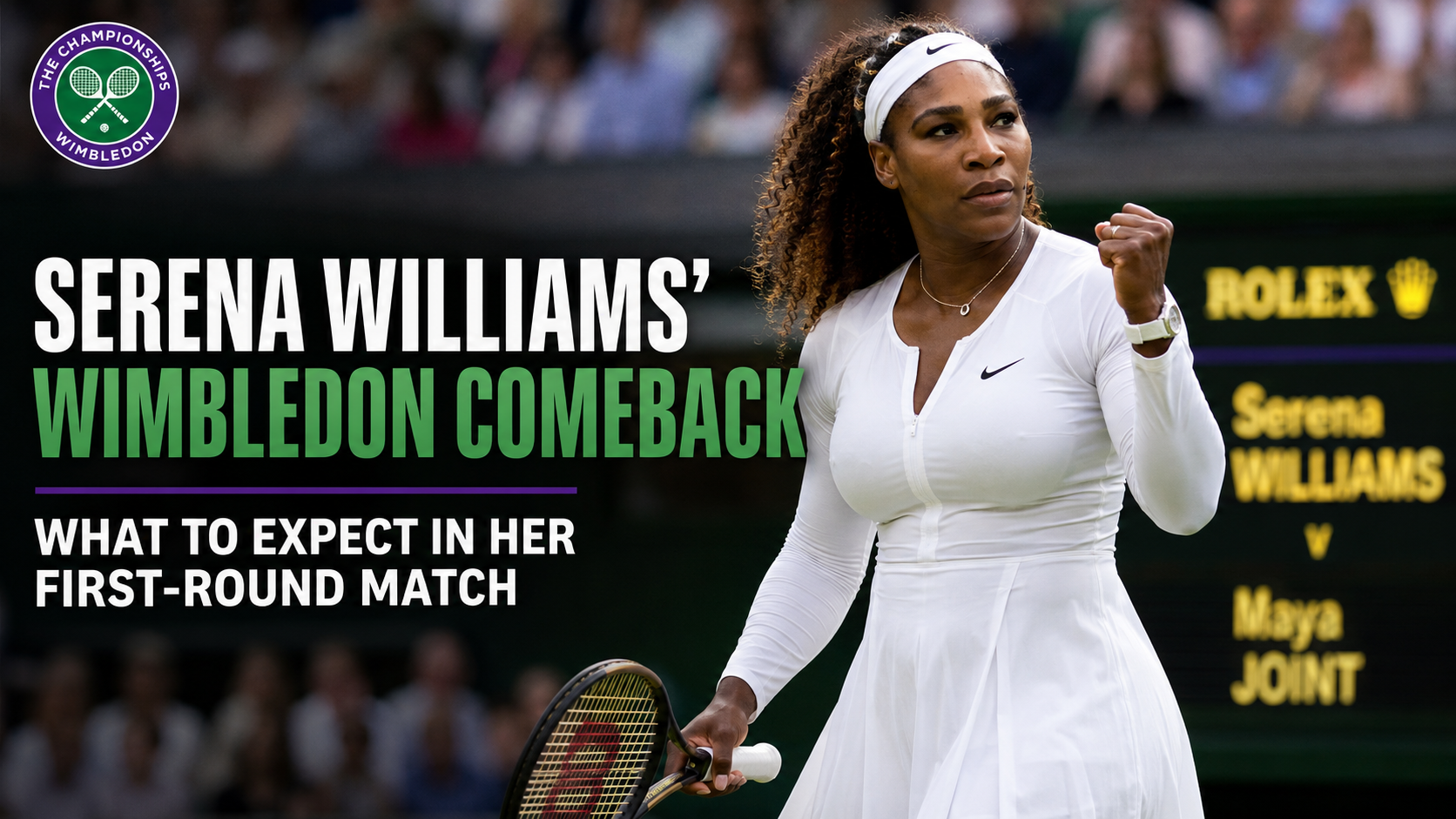
For tennis fans around the world, Serena Williams stepping onto Centre Court at Wimbledon again was more than just another first-round match—it was a historic moment. After nearly four years away from Grand Slam singles competition, the seven-time Wimbledon champion returned at the age of 44, proving once again that her competitive spirit remains as strong as ever.
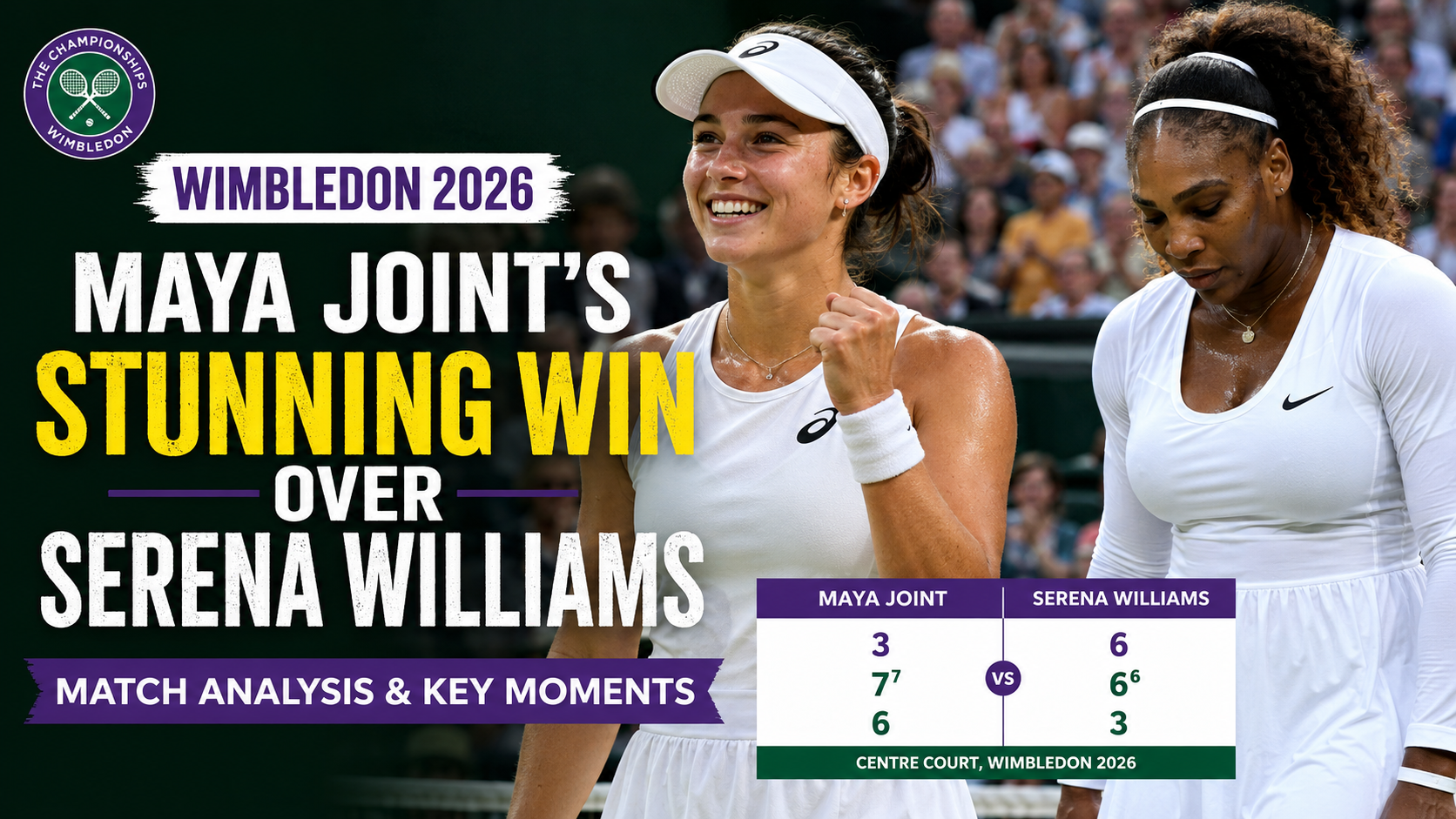
While Serena’s comeback ultimately ended in a three-set defeat against Australia’s rising star Maya Joint, the match offered plenty of reasons for optimism. From powerful serving to flashes of vintage shot-making, the American legend reminded everyone why she remains one of the greatest players in tennis history.
In this article, we’ll break down what made Serena’s Wimbledon return special, analyze her first-round performance, highlight the biggest positives and challenges, and discuss what her comeback could mean for the future.
A Long-Awaited Return to Wimbledon
Serena Williams hadn’t played a Grand Slam singles match since the 2022 US Open. Many believed her professional singles career had quietly come to an end after retirement. However, Wimbledon handed the legendary champion a wildcard entry, giving fans one more opportunity to witness one of the sport’s biggest icons compete on its most famous stage.
The atmosphere inside Centre Court reflected Serena’s incredible legacy. Thousands of fans welcomed her with a standing ovation before the first point was even played. The respect wasn’t just for her achievements but also for the courage required to return to elite competition after such a lengthy absence.
The First-Round Challenge: Maya Joint
Serena’s opponent, 20-year-old Australian Maya Joint, represented the next generation of women’s tennis. Although Joint had struggled for consistency entering Wimbledon, she possessed the movement, fitness, and fearless approach needed to test an opponent returning after years away.
The age difference—almost 24 years—created one of the most fascinating storylines of the opening round.
While Serena brought unmatched experience and championship mentality, Joint relied on youthful energy and relentless court coverage.
How the Match Unfolded
The opening set showed both Serena’s strengths and her biggest challenge.
Her serve remained one of the most dangerous weapons in women’s tennis. Even after years away, she consistently produced powerful first serves that earned quick points and kept pressure on Joint.
However, long baseline rallies told a different story.
Joint repeatedly forced Serena to move side-to-side, exposing the physical demands of singles tennis after an extended absence. Serena dropped the opening set 6-3 before raising her level significantly during the second.
One of the defining moments came in the second-set tiebreak.
Facing match point, Serena delivered two outstanding serves to keep her comeback alive before forcing a deciding set. It was a reminder of the mental toughness that helped her win 23 Grand Slam singles titles throughout her career.
The final set began positively, with Serena breaking serve early. But as the match passed the two-hour mark, fatigue became increasingly noticeable. Joint recovered, won five of the final six games, and secured a memorable 6-3, 6-7 (6), 6-3 victory.
Positives from Serena’s Comeback
Despite the loss, there were several encouraging signs.
Powerful Serving
Serena’s serve remains world-class. She regularly exceeded expectations with pace, placement, and accuracy, often winning easy points against an athletic opponent.
Championship Mentality
Many players would have folded after facing match point in the second set. Serena responded with fearless serving and incredible composure, forcing the contest into a deciding set.
Competitive Level
Considering this was her first Grand Slam singles appearance in almost four years, Serena competed remarkably well. She showed flashes of the aggressive tennis that defined her career.
The Biggest Challenges
The match also highlighted areas that become increasingly difficult with age.
Court Movement
Singles tennis demands constant movement, particularly against younger players. Joint successfully extended rallies and forced Serena to defend more often than she would have preferred.
Physical Endurance
The third set demonstrated how physically demanding Grand Slam tennis remains. Serena’s level naturally dipped as fatigue became a factor, allowing Joint to take control of the closing stages.
Match Sharpness
Competitive tennis cannot fully be replicated in practice. Serena occasionally struggled with timing during baseline exchanges, something that usually improves with more tournament matches.
What This Performance Means Going Forward
Although the result wasn’t what Serena wanted, the comeback itself was a success in many ways.
She proved she can still compete against professional players at the highest level and showed enough quality to believe she can continue improving if she chooses to play more singles events.
Her immediate focus may shift toward doubles, where movement demands are lower and her experience becomes an even greater advantage. Reports after the match also indicated she experienced discomfort in her right knee, which could influence her short-term schedule.
Whether this Wimbledon appearance becomes a one-time farewell or the beginning of a longer comeback remains uncertain. Tennis scoring rules
Why Serena’s Return Matters Beyond Tennis
Few athletes have transformed their sport the way Serena Williams has.
Her return attracted global attention because it symbolized perseverance, belief, and the willingness to embrace difficult challenges regardless of age.
Even in defeat, Serena inspired countless athletes by refusing to let expectations define her decisions.
For younger players like Maya Joint, competing against a childhood idol on Centre Court was an unforgettable milestone. For fans, it was another reminder of Serena’s lasting impact on tennis.
FAQs
Why did Serena Williams return to Wimbledon in 2026?
Serena accepted a wildcard entry to compete in Wimbledon singles after nearly four years away from Grand Slam competition. She also entered the doubles tournament alongside her sister Venus Williams.
Who did Serena Williams play in the first round?
She faced Australia’s 20-year-old Maya Joint, one of the emerging talents on the WTA Tour.
Did Serena Williams win her comeback match?
No. Serena lost to Maya Joint in three sets, 6-3, 6-7 (6), 6-3, after an entertaining contest lasting more than two hours.
What was Serena’s biggest strength during the match?
Her serve remained exceptional, helping her stay competitive throughout the match and save match point during the second-set tiebreak.
Will Serena continue playing after Wimbledon?
No official decision has been announced. However, she has expressed interest in continuing her comeback, although a minor knee issue may affect her immediate schedule.
Final Thoughts
Serena Williams’ Wimbledon comeback was about far more than the final score. While Maya Joint deserved full credit for an impressive victory, Serena demonstrated that determination, elite shot-making, and competitive fire don’t simply disappear with time.
Her performance reminded the tennis world why she remains one of the sport’s most influential figures. Although the physical challenges of singles tennis are greater than ever, Serena showed enough quality to make fans wonder whether this remarkable comeback story is truly over.
Whether she returns for more singles tournaments or focuses on doubles, Wimbledon 2026 will be remembered as the moment one of tennis’ greatest champions courageously stepped back onto Centre Court and reminded everyone why legends never stop inspiring.