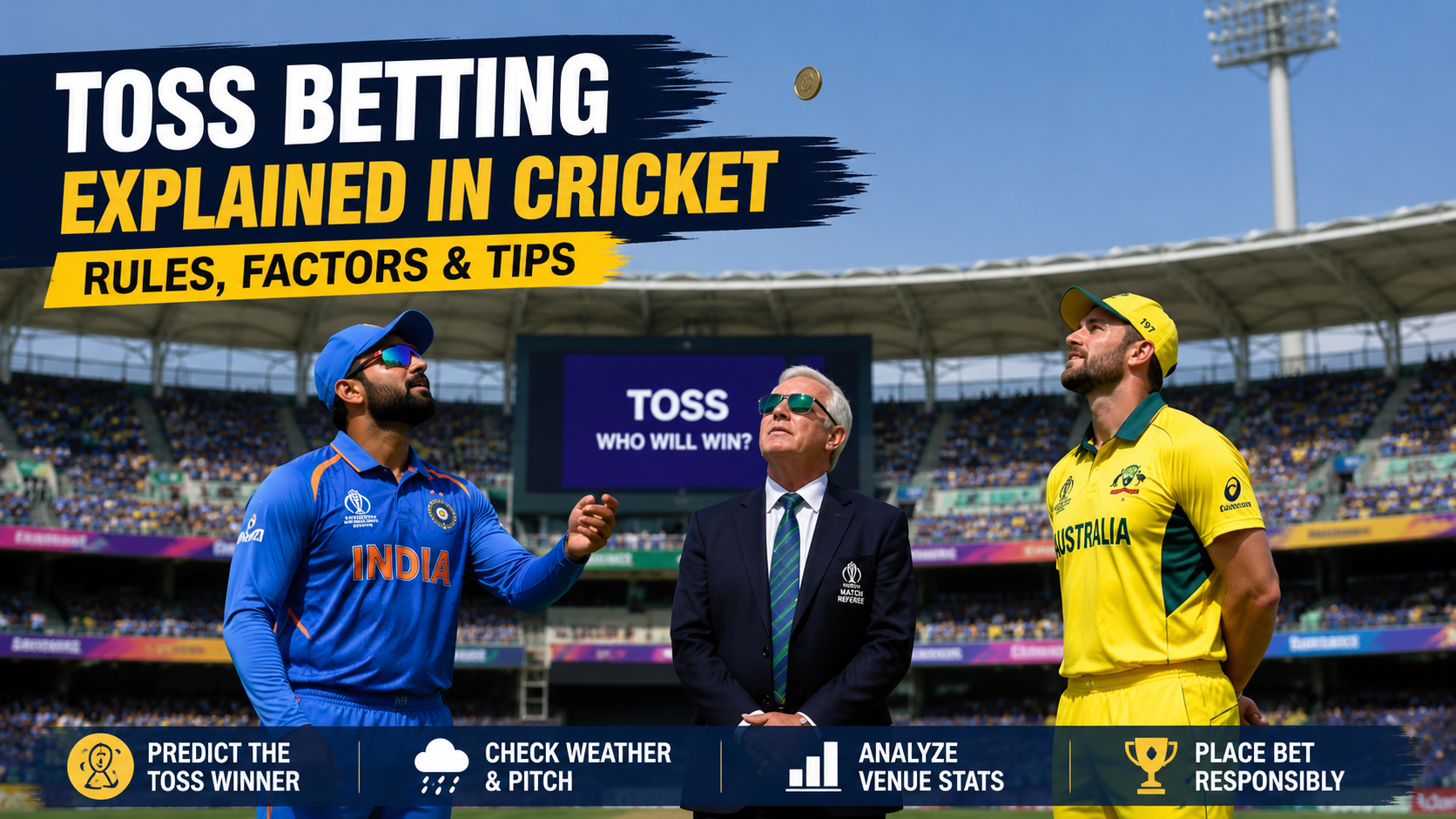

Cricket betting offers many markets beyond predicting the final winner of a match. Some markets focus on runs, while others are based on individual players, overs, partnerships, or dismissals. One interesting option is the Team to Lose Most Wickets Market.
This market is relatively simple to understand, but making an informed prediction requires looking beyond a team’s overall strength. A team can win a match and still lose more wickets than its opponent. Similarly, a losing team may lose fewer wickets if it manages to remain unbeaten while chasing or finishes its allotted overs with batters still at the crease.
In this guide, we explain how the Team to Lose Most Wickets Market works, what factors can influence the result, and what cricket followers should consider before making a prediction.
What Is the Team to Lose Most Wickets Market?
The Team to Lose Most Wickets Market is a cricket betting market where you predict which team will lose the higher number of wickets during the match.
For example:
- Team A loses 8 wickets.
- Team B loses 5 wickets.
In this situation, Team A has lost the most wickets and would be the outcome for this market.
The market is generally based on the total number of wickets lost by each team during the relevant innings or match period, depending on the specific market rules. Because betting operators can apply different settlement conditions, it is important to check the market rules before placing a bet.
A wicket can fall through several forms of dismissal, including bowled, caught, LBW, run out, and stumping. The official Laws of Cricket cover innings and dismissals in detail, making the MCC Laws of Cricket a useful reference for understanding how wickets and dismissals work in the game.
How Does This Market Work?
The basic concept is straightforward. Before or during a match, you select the team you believe will lose more wickets than the opposition.
Imagine a T20 match with the following scorecards:
Team A: 176/9
Team B: 177/6
Although Team B wins the match, Team A loses more wickets. Therefore, Team A is the team that lost the most wickets.
This example highlights an important point: the match winner and the team to lose the most wickets are not necessarily the same.
A close match can also produce interesting situations. Suppose one team successfully chases a target with only one ball remaining but loses several wickets during the chase. Meanwhile, the opposition may have scored fewer runs but lost fewer wickets during its innings.
This is why analysing wickets separately from the final match result can provide a different perspective on a cricket match.
Why Do Teams Lose More Wickets?
Several factors can influence how many wickets a team loses during an innings.
1. Strength of the Bowling Attack
A strong bowling unit can put continuous pressure on batters. Fast bowlers may generate movement and bounce, while quality spinners can make scoring difficult in the middle overs.
When a team faces a bowling attack with multiple wicket-taking options, the chances of losing wickets may increase.
It is useful to look at more than just one star bowler. A balanced attack with strong options throughout the innings can create pressure at different stages.
2. Batting Depth
Teams with deep batting line-ups may continue attacking even after losing early wickets. This can sometimes result in a higher total number of dismissals.
On the other hand, a team with limited batting depth may become more cautious after losing a few wickets. Match situations and team strategies can therefore influence the final wicket count.
3. Pitch Conditions
The playing surface can have a major impact on this market.
A pitch offering movement for fast bowlers may make the opening overs challenging. A dry surface may later provide assistance to spin bowlers. Uneven bounce can also increase the difficulty for batters.
Before considering a Team to Lose Most Wickets Market, it is useful to examine previous matches played at the venue. A pitch where teams regularly lose wickets may produce a very different match from a flat, high-scoring surface.
4. Match Format
The format of cricket can significantly affect wicket patterns.
In T20 cricket, batters often take more risks because scoring quickly is important. This aggressive approach can lead to more dismissals.
In ODI matches, teams usually manage their innings across different phases. Early wickets can change the middle-order strategy and affect how aggressively a team bats later.
Longer formats create completely different conditions, as patience, time, declarations, and multiple innings can influence how many wickets a side loses.
Under the Laws of Cricket, an innings can be completed in several ways, including a side being all out or an innings ending after the agreed number of overs or time expires.
How Toss Decisions Can Influence the Market
The toss can sometimes provide useful information, especially when conditions are expected to change.
For example, batting first on a difficult surface may expose a team to early movement. A team batting second could face different conditions later in the match.
However, the toss should not be viewed as a guarantee. A strong batting performance can overcome difficult conditions, while poor shot selection can lead to wickets even on a favourable pitch.
The best approach is to consider the toss alongside pitch conditions, team selection, recent form, and the likely match situation.
Important Statistics to Check
Statistics can help you form a more balanced opinion about this market.
Consider looking at:
- Average wickets lost by each team in recent matches
- Wickets lost during the powerplay
- Middle-order performance
- Performance against similar bowling attacks
- Venue-specific batting records
- Recent head-to-head matches
- Availability of key batters
- Bowling strength of the opposition
A single statistic should not decide your prediction. Cricket matches can change quickly, so it is better to compare several factors before reaching a conclusion.
For readers interested in understanding different cricket markets and match-related betting concepts, Cricket Betting can be used as a relevant starting point for broader information about cricket-focused markets and betting topics.
Can Both Teams Lose the Same Number of Wickets?
Yes, this is possible.
For example:
- Team A loses 7 wickets.
- Team B also loses 7 wickets.
In this situation, the market may be settled as a tie, void, or according to other specific rules set by the betting operator.
This is one of the most important reasons to read the market rules before participating. Settlement policies can vary, particularly when a match is shortened, abandoned, or affected by weather.
Common Mistakes to Avoid
One common mistake is automatically selecting the weaker team. A weaker team does not always lose more wickets. Match conditions and batting strategy can produce unexpected results.
Another mistake is focusing only on recent match results. A team may have won its last three matches but still lost several wickets in each victory.
It is also important not to ignore team news. The absence of an experienced opening batter or a strong middle-order player can change a team’s stability.
Finally, avoid making decisions based purely on odds. Odds are only one part of the market. Match analysis and understanding the settlement rules remain equally important.
FAQs
What is a Team to Lose Most Wickets Market?
It is a market where you predict which team will lose the higher number of wickets during the relevant match or innings period.
Does the team that loses the match always lose the most wickets?
No. A winning team can lose more wickets than the losing team. The market is based on wickets lost rather than the final match result.
What happens if both teams lose the same number of wickets?
The result depends on the operator’s settlement rules. The market may be settled as a tie, void, or under specific tie conditions.
Does a run out count as a wicket in this market?
A dismissal such as a run out generally counts as a wicket lost by the batting team, although the bowler does not receive credit for that wicket.
Which factors are important for this market?
Bowling strength, batting depth, pitch conditions, recent wicket patterns, team selection, and match format are among the main factors to consider.
Final Thought
The Team to Lose Most Wickets Market provides a different way to analyse a cricket match. Instead of focusing on who wins, the attention is on which batting side is likely to face more dismissals.
A useful analysis should consider the quality of both bowling attacks, batting depth, venue conditions, match format, and recent team performances. It is also important to understand the market’s settlement rules because ties, shortened matches, and other situations may affect the final outcome.
Cricket is unpredictable, and no statistic can guarantee a result. However, understanding how wickets fall and analysing the match conditions carefully can help you approach this market with a clearer perspective. Always check the official market rules and consider betting responsibly.