Cricket betting has evolved far beyond simply picking which team will win. Today, sportsbooks offer a wide variety of betting markets that make matches more exciting, even when one team is considered much stronger than the other. One such market is the handicap bet, which is popular among both new and experienced bettors.
If you’ve ever looked at a betting site and wondered why a team starts with -15.5 runs or +1.5 wickets, you’re looking at a handicap market.
This guide explains everything beginners need to know about handicap betting in cricket, including how it works, why bookmakers use it, and how to approach it more confidently.
What Is a Handicap Bet?
A handicap bet is a betting market where one team receives a virtual advantage or disadvantage before the match begins. The purpose is to make both sides of the bet more balanced, especially when there is a clear favorite.
Instead of betting on which team simply wins, you’re betting on whether a team can overcome or maintain the assigned handicap.
For example:
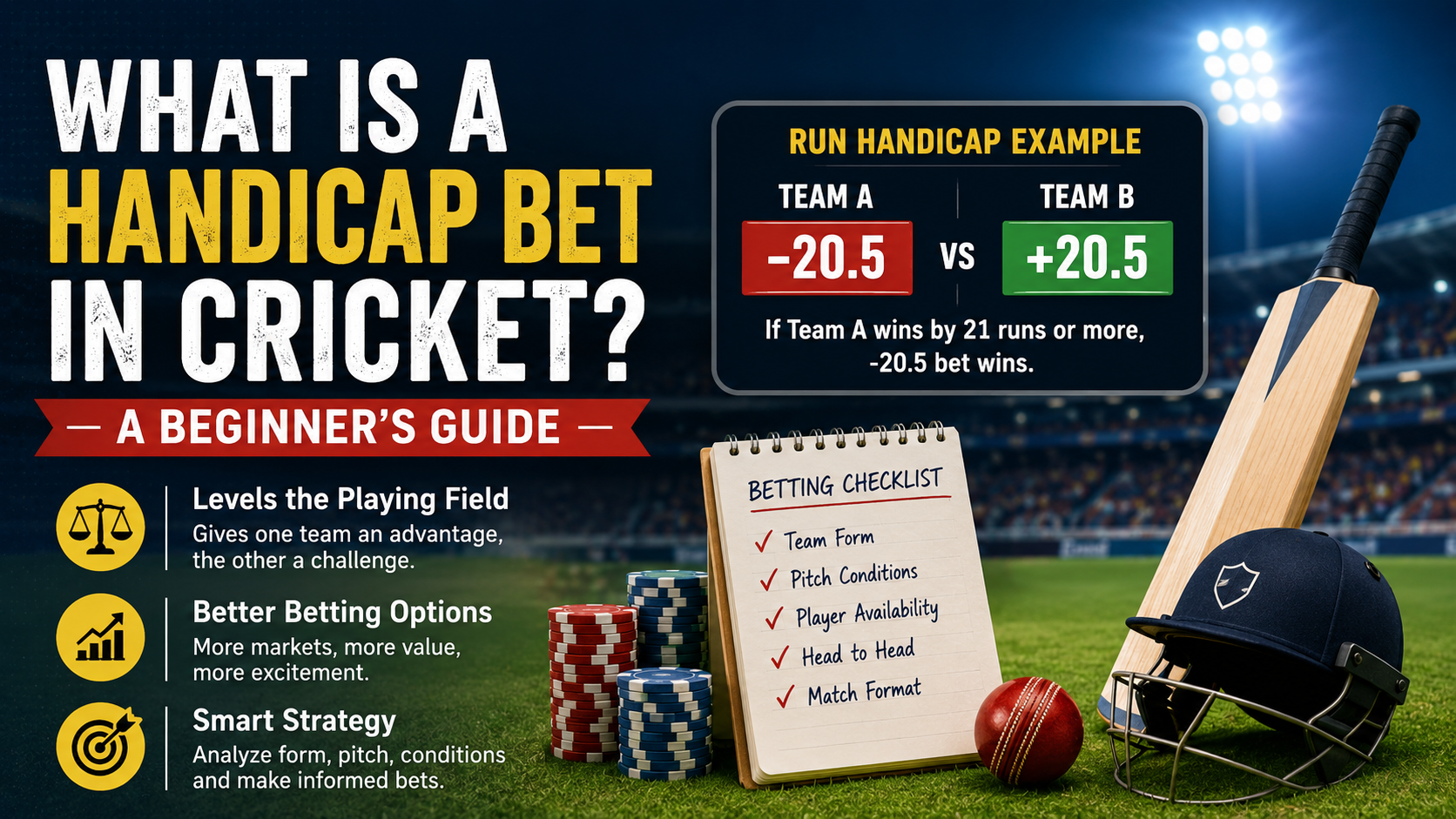
- Team A: -20.5 Runs
- Team B: +20.5 Runs
If Team A wins by 21 runs or more, the handicap bet on Team A is successful.
If Team A wins by only 15 runs, loses the match, or wins by fewer than the handicap margin, then Team B covers the handicap.
This creates more competitive odds and offers additional betting opportunities.
Why Do Bookmakers Offer Handicap Bets?
In many cricket matches, one team is heavily favored to win. Betting on that favorite often comes with very low odds.
Handicap betting helps level the playing field by giving the stronger team a virtual disadvantage while rewarding bettors willing to back them despite that challenge.
It also provides value for underdogs that are expected to compete well, even if they don’t ultimately win.
Types of Handicap Bets in Cricket
Different sportsbooks may use slightly different handicap formats, but these are the most common.
Run Handicap
This is the most popular handicap market.
Example:
- India: -18.5 Runs
- Sri Lanka: +18.5 Runs
Your bet depends on the adjusted final result after applying the handicap.
Wicket Handicap
Instead of runs, the handicap is based on wickets.
Example:
- Australia: -2.5 Wickets
- England: +2.5 Wickets
If Australia wins by three wickets or more, they cover the handicap.
Match Handicap
Some betting platforms combine runs and wickets depending on the innings or match format, offering broader handicap options for T20, ODI, and Test cricket.
A Simple Handicap Betting Example
Imagine the following match:
- Mumbai Tigers: -12.5 Runs
- Delhi Warriors: +12.5 Runs
Final Score:
- Mumbai Tigers: 182/6
- Delhi Warriors: 172/8
Mumbai wins by 10 runs.
Although Mumbai won the match, they did not cover the -12.5 run handicap because the winning margin was less than 13 runs.
In this case, bettors who backed Delhi Warriors +12.5 would win their bet.
This example highlights why simply predicting the match winner isn’t enough in handicap betting.
When Is Handicap Betting a Good Option?
Handicap betting can be useful in several situations.
Heavy Favorites
When a top-ranked team is expected to dominate, regular match odds may offer little value. Handicap markets can provide better returns if you believe the favorite will win comfortably.
Competitive Underdogs
Sometimes an underdog is capable of keeping the match close. Even if they lose, they may still cover a generous handicap.
Strong Home Teams
Teams playing at familiar venues often perform better due to pitch conditions and crowd support. This can influence handicap margins significantly.
Factors to Consider Before Placing a Handicap Bet
Blindly choosing the favorite isn’t always the smartest strategy. Consider these important factors first.
Team Form
Recent performances often reveal whether a team is consistently winning by large margins or struggling to finish games strongly.
Pitch Conditions
Some pitches produce high-scoring games, while others help bowlers dominate. Understanding the venue helps estimate realistic winning margins.
Player Availability
Missing key batters, bowlers, or all-rounders can dramatically affect a team’s ability to cover a handicap.
Match Format
Winning margins vary between T20s, ODIs, and Test matches. T20 games often feature smaller margins, while longer formats may produce larger victories.
Common Mistakes Beginners Make
Many new bettors misunderstand handicap betting. Avoid these common errors:
- Assuming the favorite always covers the handicap.
- Ignoring pitch and weather conditions.
- Focusing only on head-to-head records.
- Betting without understanding the handicap line.
- Chasing attractive odds without proper research.
Patience and analysis usually lead to better long-term decisions than emotional betting.
Learn Cricket Betting Markets Before You Bet
Understanding different betting markets helps you make more informed decisions instead of relying on guesswork.
If you’re interested in exploring beginner-friendly cricket betting concepts, odds explanations, and match insights, this cricket betting guide offers useful educational resources for new and experienced cricket followers alike.
Learning how various betting markets work before placing a wager can improve your overall understanding of the game.
Is Handicap Betting Better Than Match Winner Betting?
There isn’t a universal answer.
Match winner betting is generally easier for beginners because you only need to predict who wins.
Handicap betting, however, often provides:
- Better value on favorites
- More balanced odds
- Additional strategic opportunities
- Greater excitement during closely contested matches
As your understanding of cricket grows, handicap betting becomes easier to evaluate.
Final Thought
Handicap betting adds an extra layer of strategy to cricket betting by balancing uneven contests and creating more competitive odds. While the concept may seem confusing at first, it becomes much easier once you understand how virtual run or wicket advantages affect the final result.
Rather than focusing only on which team is stronger, successful handicap betting involves analyzing recent form, team news, pitch conditions, and likely winning margins. With consistent research and disciplined decision-making, beginners can gradually become more confident in reading handicap markets.
The key is to treat handicap betting as a skill that improves with knowledge, patience, and experience rather than relying purely on luck.
Frequently Asked Questions (FAQs)
1. What does a -10.5 run handicap mean in cricket?
It means the selected team must win by at least 11 runs for your handicap bet to be successful.
2. Can I win a handicap bet even if my team loses?
Yes. If you back the underdog with a positive handicap and they lose by less than the handicap margin, your bet can still win.
3. Is handicap betting available for T20 matches?
Yes. Handicap markets are commonly available for T20, ODI, and Test cricket across many sports books.
4. Is handicap betting suitable for beginners?
Yes, provided you understand how handicap lines work and spend time researching team form, pitch conditions, and player availability before betting.
5. What is the biggest advantage of handicap betting?
The main advantage is improved betting value by creating more balanced odds, especially in matches with a clear favourite.