
Cricket betting includes a wide range of markets that focus on what may happen during a match rather than simply predicting the winner. One such option is the team wicket market, which focuses on the number of wickets a batting side may lose during an innings or within a particular period of play.
These markets can appear in different forms depending on the cricket format, sportsbook, and specific match. Understanding how they work requires a basic knowledge of wickets, overs, innings structure, and market settlement. For anyone looking at different Cricbet99 cricket betting markets, understanding team wicket markets can make the terminology and market structure easier to follow.
What Is a Team Wicket Market?
A team wicket market is a cricket betting market based on the number of wickets lost by a particular team.
For example, a market might offer a line such as:
- Team A to lose over 5.5 wickets
- Team A to lose under 5.5 wickets
The number shown is the market line. In this example, the team would need to lose at least six wickets for an over 5.5 selection to be successful, while five or fewer wickets would fall on an under 5.5 selection.
The exact options and settlement conditions can differ between betting platforms, so checking the market rules before placing a wager is important.
How Team Wicket Markets Work
The basic idea is straightforward. The market sets a numerical line for the wickets a team is expected to lose, and the final number of wickets determines the settlement.
Consider a T20 innings where a team finishes at 176/7.
If the market line was 5.5 wickets:
- Over 5.5 wickets would correspond to seven wickets lost.
- Under 5.5 wickets would correspond to five or fewer wickets lost.
The key point is that the market is concerned with wickets lost, not the number of runs scored.
This distinction is important because a team can score a large total while losing relatively few wickets, or it can lose several wickets while producing a modest score.
Team Wickets vs Individual Wickets
Team wicket markets should not be confused with player wicket markets.
A team wicket market concerns how many wickets the batting team loses. An individual bowler wicket market, on the other hand, focuses on the number of dismissals credited to a particular bowler.
For example, a market could ask whether Team B will lose more than 6.5 wickets. Another market could ask whether a particular bowler will take over 2.5 wickets.
These are completely different markets, even though both involve wickets.
Understanding this difference helps avoid selecting the wrong market when reviewing a cricket sportsbook.
Why the Cricket Format Matters
The format of the match can influence how team wicket markets are structured.
In T20 cricket, an innings normally consists of a maximum of 20 overs. With fewer overs available, teams often have a limited amount of time to build an innings, which can affect batting approaches.
ODI cricket provides a longer innings, traditionally up to 50 overs per side, while Test cricket follows a very different structure, with innings that are not limited by a fixed number of overs in the same way.
Because the formats operate differently, team wicket markets may also vary according to the competition and match conditions.
A market offered for a T20 match should therefore not automatically be interpreted in exactly the same way as one offered for an ODI or Test match.
What Can Influence Team Wicket Markets?
Several match factors can affect how a team performs during an innings.
Batting Line-Up
The quality and depth of a team’s batting order can influence how an innings develops. A strong top order may provide stability, while an inexperienced or shortened batting line-up can create different match conditions.
Bowling Attack
The opposition’s bowling strength is another important factor. New-ball bowlers may create early pressure, while spinners can become influential as the innings progresses.
Pitch Conditions
Pitch behaviour can affect batting and bowling. A surface offering movement or turn may create more challenging batting conditions than a flat pitch.
Match Situation
The required run rate can also change batting decisions. A team chasing a large target may take greater risks, potentially creating more opportunities for wickets.
Weather and Match Interruptions
Rain or other interruptions can change the structure of a limited-overs match. Revised targets and reduced overs can alter the way teams approach their innings.
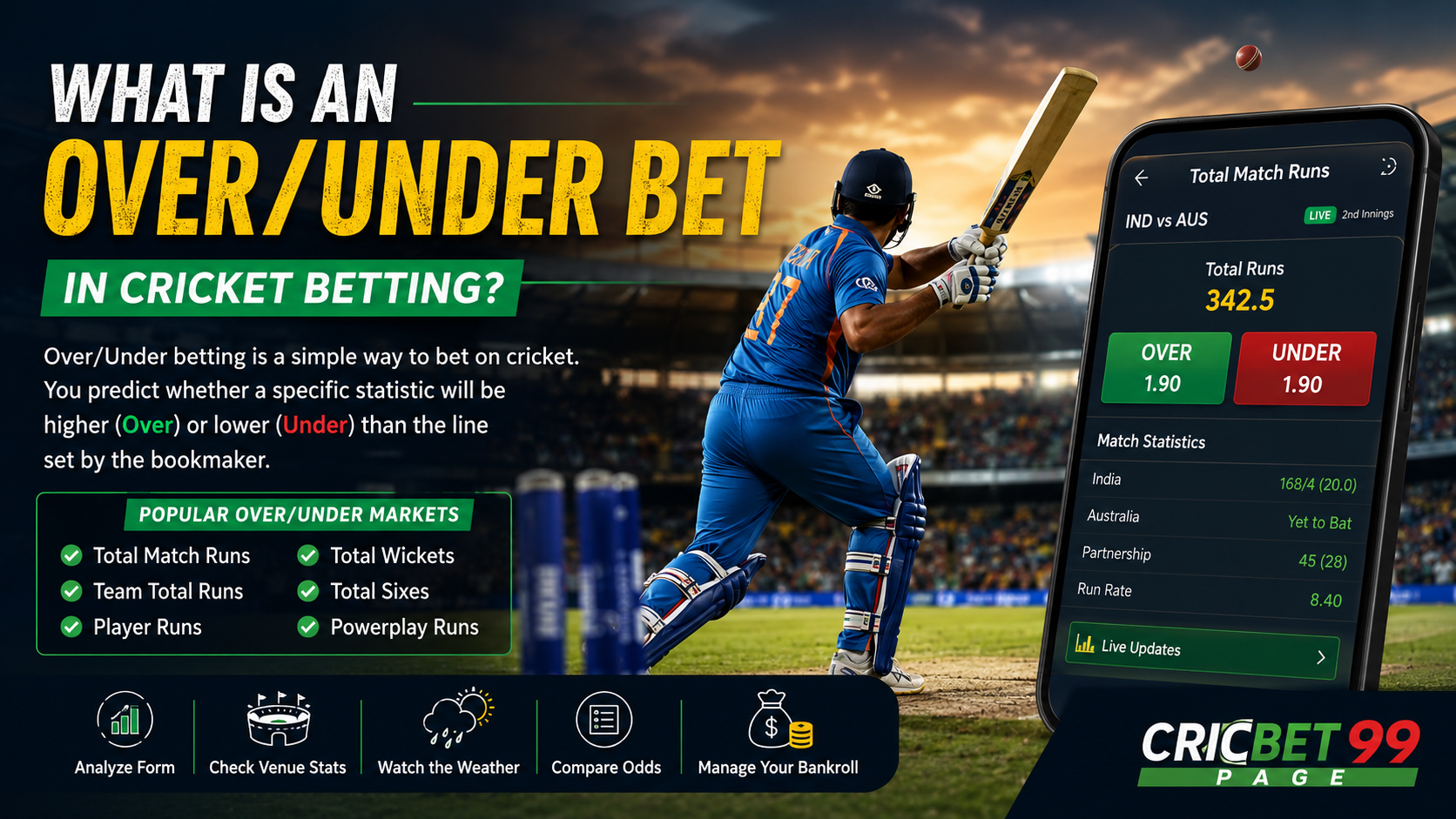
Reading an Over/Under Team Wicket Line
The most important part of a team wicket market is understanding the number attached to the line.
Suppose the market shows:
Team A — Total Wickets: 4.5
There are two basic possibilities:
Over 4.5: Team A needs to lose at least five wickets.
Under 4.5: Team A needs to lose four or fewer wickets.
Half-number lines are commonly used because they remove the possibility of an exact tie on the line.
However, not every market uses the same format. Some platforms may offer alternative wicket ranges or different settlement conditions. Always read the specific market description before making a decision.
Why Scorecards Matter
The final scorecard is important when understanding team wicket markets because it records the number of wickets lost during the innings.
For example, a score of 154/3 means the batting team scored 154 runs while losing three wickets. A score of 154/8 means the same number of runs were scored but eight wickets were lost.
This demonstrates why runs and wickets should be treated as separate statistics when reading cricket markets.
Official cricket scoring resources also explain how runs and wickets form part of the basic structure of recording an innings.
Team Wicket Markets During Live Betting
Team wicket markets can also appear while an innings is underway.
Live markets may change as wickets fall, partnerships develop, overs pass, and the match situation changes. A team that begins an innings with all ten wickets available will gradually have fewer wickets remaining as dismissals occur.
For example, if a team reaches 80/1 after 10 overs, the market may be different from the situation at 80/4 because the batting resources remaining are not the same.
Live betting markets can move quickly, and some markets may temporarily become unavailable around significant events. This is why users should understand the settlement rules rather than relying only on the displayed number.
Common Mistakes to Avoid
One common mistake is confusing wickets lost with wickets remaining. If a team is 120/4, it has lost four wickets and has six wickets remaining.
Another mistake is assuming that a high-scoring innings automatically means fewer wickets. A team can score quickly while losing several wickets, particularly when batters adopt an aggressive approach.
It is also important not to assume that every sportsbook uses identical market rules. Settlement conditions, abandoned matches, reduced overs, and other circumstances can be handled differently.
Frequently Asked Questions
What is a team wicket market?
A team wicket market is a betting market based on the number of wickets a particular batting team loses during an innings or specified period.
What does over 5.5 team wickets mean?
It generally means the team must lose at least six wickets for the over selection to qualify, subject to the market’s stated settlement rules.
What does under 5.5 wickets mean?
It generally means the team must lose five or fewer wickets.
Are team wickets the same as bowler wickets?
No. Team wickets refer to the total dismissals suffered by the batting side, while bowler wicket markets focus on dismissals credited to an individual bowler.
Can team wicket markets be available during live matches?
Yes, some sportsbooks offer live team wicket markets, although availability depends on the match, format, platform, and current market conditions.
Does the cricket format affect team wicket markets?
Yes. T20, ODI, and Test cricket have different innings structures, so market availability and conditions can vary between formats.
Final Thought
Team wicket markets provide a specific way of following the dismissal side of a cricket innings. Instead of focusing only on runs or the final match result, these markets concentrate on how many wickets a batting team loses.
Understanding the difference between wickets lost and wickets remaining, reading over/under lines correctly, and checking the specific settlement rules are essential before interpreting any team wicket market. Match format, batting depth, bowling strength, pitch conditions, and the changing match situation can all influence how an innings develops.
As with any betting market, the outcome remains uncertain. Understanding the market rules and keeping decisions within a sensible entertainment budget can help maintain a more informed and responsible approach to cricket betting.